Blog Site Discontinued June 23, 2017

Welcome. This blog site, healthy eating and food safety, has been discontinued as of June 23, 2017. I look forward to your comments and feedback regarding use of this tool to disseminate educational information.

Tuesday, August 31, 2010

Nearly Three in Ten Wisconsin Adults is Obese

The number of Wisconsin residents who are obese has reached a new high. Nearly three of every ten adults in the state are now classified as obese.

Each year, state health departments use standard telephone interview questions to collect data on the height and weight of adults in the United States. According to the newest data just released by the U.S> Centers for Disease Control and Prevention (CDC), Wisconsin’s obesity rate is 29 percent. That’s in addition to the 36 percent of Wisconsin adults who are overweight, but not to the extent of being obese.

These estimates are especially troubling because they are continuing to increase year by year. The estimated percent of adults who were obese in Wisconsin was 16 percent in 1995, 20 percent in 2000, 24 percent in 2005 and 29 percent in 2009.

These data show the importance of nutrition in planning for public health and community education programs. “Adequate, appropriate and safe food and nutrition” has been pegged as one of the 12 focus areas in Wisconsin’s newest state health plan.

Source: Susan Nitzke, Professor and Nutrition Specialist, Nutritional Sciences, UW-Madison

Thursday, August 26, 2010

Watermelon

Watermelon is a tasty summer treat. Watermelon is not lightweight in the nutrient department. A one cup serving only has 50 calories. It contains vitamin A and C. It also contains potassium. Watermelon has no fat and cholesterol.

Watermelon has been designated as one of the “clean 15”, the fruits and vegetables with the fewest pesticide residues according to the Environmental Working Group.

So next time you go the grocery store or farmers market, stop and pick up a watermelon for a tasty, summer treat. If a whole watermelon is more than can be consumed, try one of the smaller watermelons that are designed for one or two people.

Canning Tomatoes Safely

Tomatoes are the most widely home-canned product in the United States. Many factors affect the acidity of canned tomatoes i.e. growing low acid tomatoes, overripe produce, damaged or decayed produce, and tomato juices are less acidic than tomato solids.

Since so many factors affect the acidity of canned tomatoes, the United States Department of Agriculture (USDA) recommends that acid be added to home canned tomato products. Bottled lemon juice can be used to acidify canned tomato products. Add one tablespoon of lemon juice per pint and two tablespoons per quart. Measure this amount into canning jars before sealing.

Small amounts of vinegar are not as effective as lemon juice in increasing acidity. Enough vinegar to increase the acidity of canned tomatoes changes the flavor of the canned product. For this reason, vinegar is not recommended.

Monday, August 23, 2010

Nationwide Egg Recall

There is a national recall of eggs on-going with hundreds of cases of salmonellosis linked to eggs produced by Wright Farms out of Iowa. Some of the eggs were distributed in Wisconsin. The particular organism linked to the recall is /Salmonella /Enteritidis. Following is food safety information from the Centers for Disease Control followed by a press release from the company linked to the recall. Stay healthy!

Clinical Features/Signs and Symptoms

A person infected with /Salmonella/ Enteritidis usually has fever, abdominal cramps, and diarrhea beginning 12 to 72 hours after consuming a contaminated food or beverage. The illness usually lasts 4 to 7 days, and most persons recover without antibiotic treatment. However, the diarrhea can be severe, and hospitalization may be required. The elderly, infants, and those with impaired immune systems may have a more serious illness. In these patients, the infection may spread from the intestines to the blood stream, and then to other body sites and can cause death unless the person is treated promptly with antibiotics. For more information, visit CDC’s /Salmonella/ Enteritidis http://www.cdc.gov/nczved/divisions/dfbmd/diseases/salmonella_enteritidis/ website.

Advice to Consumers
  • Don’t eat recalled eggs or products containing recalled eggs.
  • Recalled eggs might still be in grocery stores, restaurants, and consumers' homes. Consumers who have recalled eggs should discard them or return them to their retailer for a refund.
  • Discard cracked or dirty eggs.
  • Wash hands, cooking utensils, and food preparation surfaces with soap and water after contact with raw eggs.
  • Eggs should be cooked until both the white and the yolk are firm and eaten promptly after cooking.

Thursday, August 12, 2010

Tomato Late Blight Confirmed in Brown County

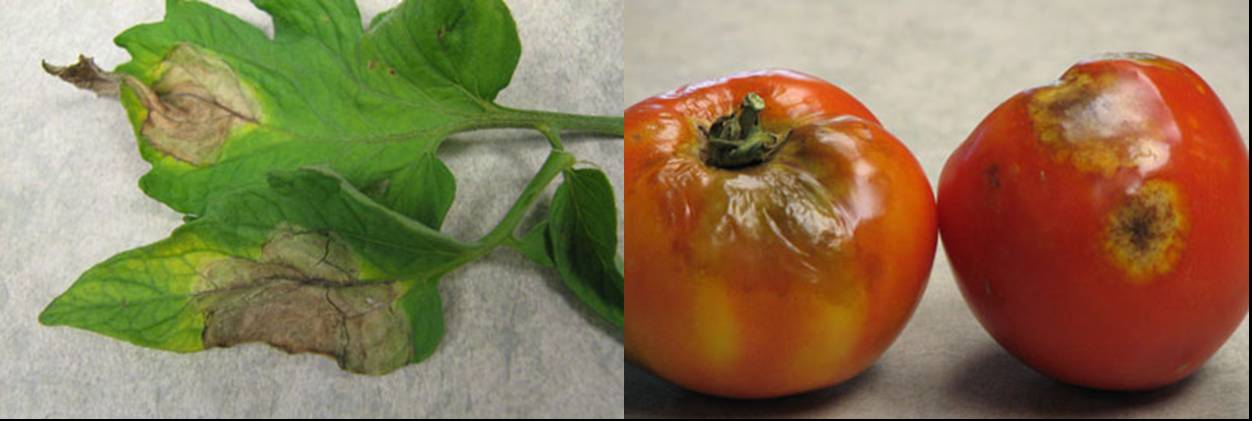
Late blight, a highly destructive disease of tomato and potato, has been identified in a home gardener’s tomatoes in Brown County. The infected tomato leaf and fruit sample submitted by the home gardener to the Brown County UW Extension office on August 3rd has been confirmed by Dr. Amanda Gevens, UW-Extension Plant Pathologist, to be late blight infection. This is the first reported case of late blight infection in Brown County. According to the homeowner, the disease spread rapidly in their backyard vegetable garden (within 10 days) and has so far killed 15 tomato plants.
Late blight affects mainly tomatoes and potatoes but it can affect peppers and egg plants to a lesser extent. The cool, wet condition in past few weeks has been ideal for the development of late blight disease and can cause the plant to collapse in about 7-10 days. Other counties in the state that have confirmed the presence of tomato late blight this year are Waukesha, Monroe and Kewanee.

Home gardeners need to be vigilant in scouting their tomatoes and potatoes for late blight. The symptom of the disease begins as pale green or olive green blotches on leaves that enlarge to become brown-black, water-soaked and oily in appearance. Dark brown stem lesions are also prominent on the infected plant. On the fruit, sunken or firm golden to chocolate-brown lesions with distinct rings appear. At a later stage, white-gray fuzzy growth can appear on the infected region of the fruit.

For proper diagnosis, bring a sample of your tomato leaves to the Brown County UW Extension Office.


If you’re unfortunate to have the late blight disease in your tomato plants, harvest only the healthy fruit from all your tomato plants as soon as possible. Infected fruits are bitter in taste and should not be used for cooking or canning purposes. Remove the infected plants completely, place them in a black plastic bag, close the bag and let it sit in the sun for a few days to kill the pathogen. Then place the sealed bag of plants on the curb for trash pickup. Do not compost infected plants.

Source: Vijai Pandian, Brown County UW-Extension Horticulture Educator

Tuesday, August 10, 2010

Canning Pickles


Cucumbers are ripening, so it’s time to think about making pickles. Pickling may seem like a complicated process laden with many steps. You can make safe, high quality pickles if you remember two basic rules: 1) use high quality ingredients, and 2) follow tested recipes precisely.

Here are some tips for successful pickles.

For best quality, pickle fruits and vegetables within 24 hours of harvest or refrigerate for no longer than a few days. Remove all blossoms, and cut a 1/16-inch slice from the blossom end of the cucumbers and remove. The blossoms contain enzymes that can cause softening and result in an unacceptable product.

Softened water is recommended for making pickles and relishes. Hard water usually contains lime that may decrease acidity resulting in an unsafe product, or contain iron, magnesium or sulfur compounds that can cause discoloration or off-flavors.

Use commercial vinegar that is standardized at a 5 percent acetic acid content. Use the type of vinegar the recipe calls for, either white or cider vinegar. Some grocery stores stock 4 percent vinegar which is not approved for home canning.

Canning and pickling salt – pure granulated salt is recommended for use in all kinds of pickles. This salt does not contain anti-caking agents or iodine. Plain salt, iodized table salt and sea salt are not recommended for pickling.

If you use freshly picked cucumbers, follow an up-to-date, tested recipe and heat process pickles for the correct length of time. Pickles will turn out crisp and you won’t need to add firming agents. A recommended method for making crisp pickles is to soak cucumbers in ice water for 4 to 5 hours before pickling.

Good sources of recipes for making pickles include the UW-Extension bulletin titled: Homemade Pickles & Relishes or the Ball Blue Book.

Source: UW-Extension bulletin Homemade Pickles and Relish by Barbara Ingham, UW-Extension Food Safety Specialist.

Friday, August 6, 2010

Value of Summer Fruits

Many berries available in the summer are health stars. Berries along with other red, blue and purple fruits contain antioxidants. The other plus is that the calorie count is low. For example, one cup of raspberries has only 61 calories, 5.8 grams of fiber, and no fat or cholesterol. Blueberries are another nutritional powerhouse: having 145 calories per cup, 3.3 grams of fiber and a good supply of antioxidants. Berries also supply vitamins and minerals.

Here are some suggestions for incorporating summer fruits into daily meals:

• Enjoy blueberries throughout the winter months. After washing blueberries, lay them on paper towels to dry. Then place on cookie sheets with sides and place in the freezer for one to two hours. Remove from cookies sheets and place in freezer bags or freezer containers. By freezing them this way, they will break apart more easily. Enjoy this winter on cereal or in muffins.

• Add berries to mixed greens for a tasty salad.

• Layer berries, vanilla yogurt and granola to make a parfait.

• Mix berries with other fruits to make a tasty salad.

• Enjoy berries just as they are with all of their summer goodness.

• Strawberries can also be frozen and enjoyed at a later time in smoothies. Combine the following ingredients in the blender:
-6 large strawberries
-½ cup strawberry yogurt
-½ cup vanilla ice cream
-½ cup skim milk
-Put all ingredients in the blender and blend until smooth.

Tuesday, August 3, 2010

Counting Up Calcium

Many Americans do not consume significant amounts of calcium rich foods. There are a number of foods that contain calcium.
Dairy foods supply 73 percent of all the calcium available in the U.S. food supply. Besides providing calcium, they supply protein, vitamin D (if fortified), and phosphorus, which together help the body absorb and deposit calcium in bones. Dairy foods are also important sources of vitamin A, riboflavin, vitamin B12, magnesium, and potassium.

Other foods also supply calcium including dark-green leafy vegetables and fish with edible bones. Many processed foods such as soy milk, tofu, orange juice, and breakfast cereal may be fortified with calcium.

Green, leafy vegetables and grain products supply some calcium. However, some vegetables such as spinach contain oxalates; grains may contain phytates. Both bind with some minerals, including calcium, magnesium, and iron, partially blocking their absorption. Caffeine can interfere with calcium absorption, too.
                                
                                 (Click on chart to enlarge)

Source: American Dietetic Association Complete Food and Nutrition Guide, 2nd Edition

Thursday, July 29, 2010

Selecting Appropriate Containers for Freezing Foods

Freezing is an excellent way to preserve fresh vegetables at home. Freezing does not sterilize food; the extreme cold simply retards growth of microorganisms and slows down changes that affect quality or cause spoilage in food.


The quality of frozen vegetables for freezing, assemble the containers you will use. The selection of containers depends on the vegetables being frozen, personal preference and the types that are readily available. Containers should be moisture-vapor resistant, durable, easy to seal and should not become brittle at low temperatures.

There are several different types of packaging materials that work well in freezers. They include rigid containers, flexible bags, collapsible cover boxes and freezer wrap. These materials help prevent freezer burn and the breakdown of textures in frozen foods; they also prevent color and flavor changes.

Rigid containers can hold most foods. The containers are re-usable and are easy to stack. They are helpful for storing foods that contain liquids. The most common and popular rigid container is one made of moisture-vapor resistant plastic with a snap on lid. With proper care, these plastic containers can be used for years.

Glass jars can also be used to store frozen foods, but they should not be used o store liquids. If you use glass jars, be sure to choose the wide-mouth, dual-purpose jars that are for freezing and canning. These jars are specially made to withstand freezing and boiling temperatures.

The wide mouth of the jar allows easy removal of partially thawed foods and gives room for expansion during freezing. Leave at least 1 inch of headspace (the unfilled space above food or liquids in jars or freezer containers) for expansion. Also, new lids should be used each time and rinsed in cold tap water before applying to the mouth of the jar.

Another popular method of storing frozen foods is using bags made of moisture-vapor-resistant polyethylene. They work well for dry food products and also can be used for liquid packs.

When sealing freezer bag, leave no air in the bag with the food. After removing all the air, twist the top of the best to form a spiral and fold if over like a gooseneck. Wrap the gooseneck several times about a half-inch from the food with some sort of closure material. If a covered-wire closure is used, be sure to wrap the ends so they don’t puncture the bag. The bag should be loose to allow food to expand during freezing.

Some household containers are not recommended for freezing. The cardboard cartons that milk, ice cream or cottage cheese come in are not moisture-vapor resistant enough. Regular (not canning) jars break too easily at freezer temperatures. Foods stored in these materials for long periods of time may develop freezer burn and absorb undesirable odors.

For more information, contact your county UW-Extension Office.

Tuesday, July 27, 2010

Tart Cherries

The tart cherry crop was plentiful this summer. As a result, many people have picked, pitted and frozen cherries. Below is a recipe for making cherry pie filling. This is a great way to use frozen cherries.

This recipe was demonstrated at the fruit canning class I presented earlier this week. The recipe turns out great. The filling works well in pies, crisps, and tortes.

Cherry Pie Filling:
6 quarts tart cherries, fresh or thawed
7 cups sugar
1 ¾ cups Clearjel®
9 ⅓ cups cold water or water and juice
½ cup bottled lemon juice
1 tsp. cinnamon (optional)
2 tsp. almond extract (optional)

Select fresh, very ripe and firm cherries. Or select unsweetened frozen cherries, thaw and then collect and measure the juice and use it to replace all of part of the water in the recipe.

Hot pack: Wash and pit fresh cherries, and hold in cold water. To prevent stem and end browning, add ascorbic acid. Combine sugar and Clearjel® in a large saucepan and add water, or water and juice. If desired, add cinnamon and almond extract. Stir and cook over medium-high heat until mixture thickens and begins to bubble. Add bottled lemon juice and boil 1 minute, stirring constantly. Fold in cherries immediately and fill clean, hot jars without delay, leaving 1-inch headspace. Remove bubbles and wipe jar rims clean. Adjust lids.

Yield: 7 quarts

Process in a boiling water canner: 30 minutes for pints or quarts.

Friday, July 23, 2010

Strong Women™, Strong Bones

Be a strong woman at any age. Women 35 years of age and older can start to lose one-quarter to one-third pound of muscle each year. Over time, the loss of two-percent of strength per year results in muscle weakness and difficulty in moving. Combat the problem by enrolling in Strong Women™
  • Strengthen muscles, increase bone density
  • Regain bone and muscle - lose fat
  • Reduce the risk of osteoporosis and related fractures
  • Improve arthritis and diabetes symptoms
The Strong Women™ training programs are designed to help women become or stay fit, strong and healthy.

This program will be held at the Brown County UW-Extension Office, 1150 Bellevue Street, Green Bay, WI 54302.

This series will be held on the following dates from 8:30am – 9:30am:
July 27 & 29
August 3, 5, 10, 12, 17, 19, 24, &26

Please contact the Brown County UW-Extension Office at 920-391-4610 if you are interested in attending. The registration fee is $20.

Thursday, July 22, 2010

Safely Using Produce from Flooded Gardens

After flooding occurs, gardeners often raise questions about the safety of consuming produce from gardens that were under water for a day or two. How concerned gardeners have to be about using garden produce after a flood depends, to a large degree, on how “clean” the flood water was or whether it was likely to have been contaminated with sewage, river or creek water, farm run-off, or industrial pollutants. The most conservative answer — one that eliminates any and all risks — is that gardeners should discard all produce that was touched by flood water. However, if flooding occurs early, there will typically be weeks left in the growing season, and gardeners will likely wish to salvage some crops. Click on the following link to read more and get tips for considering what can be salvaged and what must be discarded from a flooded garden.

http://www.foodsafety.wisc.edu/assets/factsheets/Safely%20Using%20Produce%20from%20Flooded%20Gardens.doc

Tuesday, July 20, 2010

Using Plastic Wrap in the Microwave

If you use plastic wrap to cover items before placing them in the microwave, look for plastic wrap that specifically says it’s microwave-safe. Also don’t let plastic wrap actually touch the food during the microwaving process. In addition to using microwave-safe plastic wrap, other safe wrapping material includes waxed paper, cooking bags, parchment paper and white paper towels.

There are a number of containers not recommended for use in the microwave oven. These include plastic storage containers such as margarine tubs, take-out containers, whipped-topping bowls and other one-time-use containers. These containers can warp or melt, causing potentially harmful chemicals to migrate into the food. Also do not use aluminum foil, plastic grocery bags and plastic storage bags.

Always use a microwave-safe dish and use the lid’s cover or covering suggested above. Make sure the cover does not touch the food.

Monday, July 19, 2010

Fruit Canning Class

The fruit canning class scheduled for July 21st has reached capacity and is full. This fruit canning class will be repeated on Wednesday, August 4th from 6:30 p.m. to 8:00 p.m. at the Brown County UW-Extension Office. The cost is $5.00.

Please register by contacting the Brown County UW-Extension Office at 920-391-4610.

Thursday, July 15, 2010

Blueberries

It‘s July and that means an abundance of fresh blueberries in the grocery stores and at farmers markets.

Fresh blueberries contain antioxidants called anthocyanins, the pigments responsible for the blue color of blueberries. Antioxidants are important because they appear to be at least partially responsible for lowering the risk of hear disease and cancer.

Fresh blueberries are rich in vitamin C and naturally low in fat, cholesterol and sodium. They also contain iron, potassium and other important minerals, and are a good source of dietary fiber.

Blueberries store longer than most other berries – up to five days fresh and for months when frozen.

To freeze blueberries for later use, wash them and then lay them out to dry. They can be patted dry with paper towels. Place berries on a single layer on a cookie sheet and freeze for approximately two hours. Then package in freezer bags or freezer containers.

Blueberries are also a good addition to muffins, pancakes and coffee cake. Or take a handful out of the freezer to thaw and enjoy on cereal.